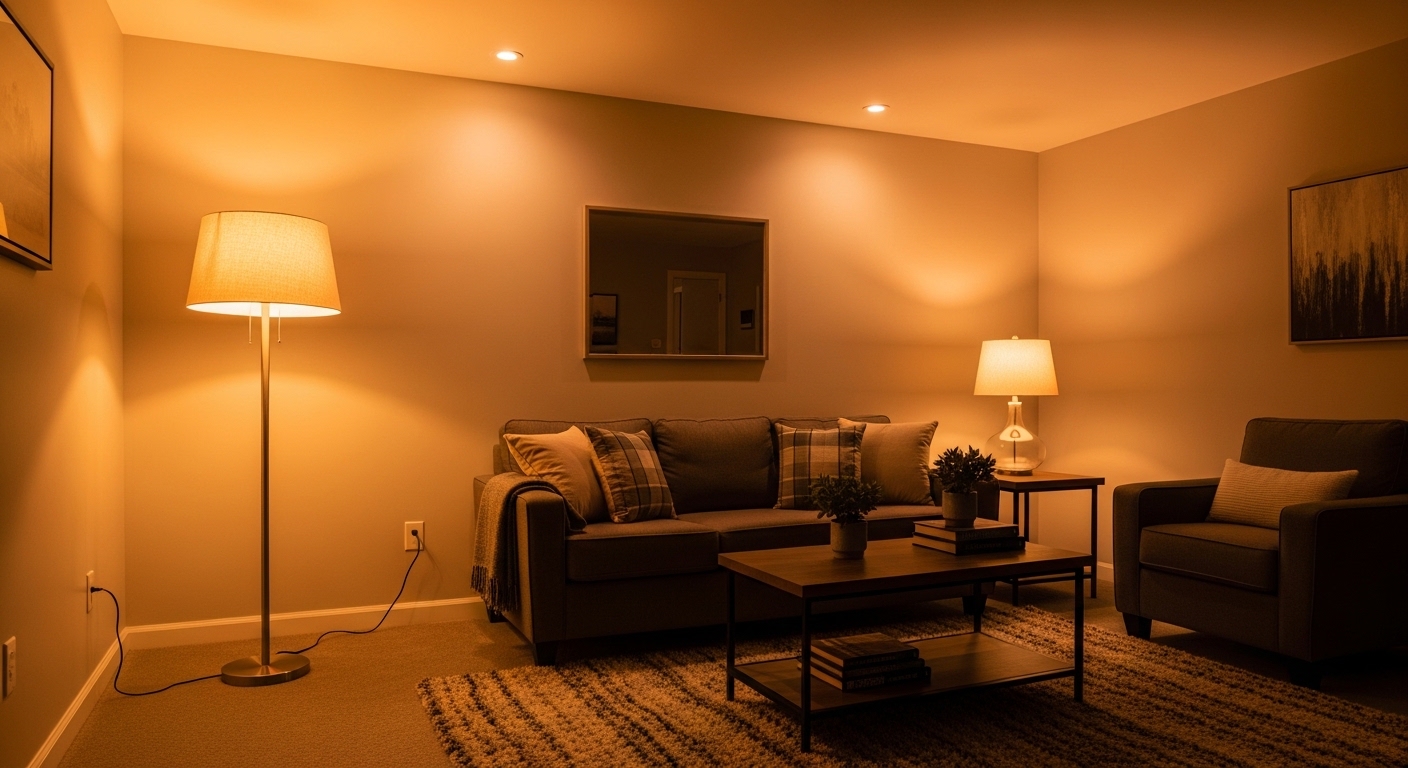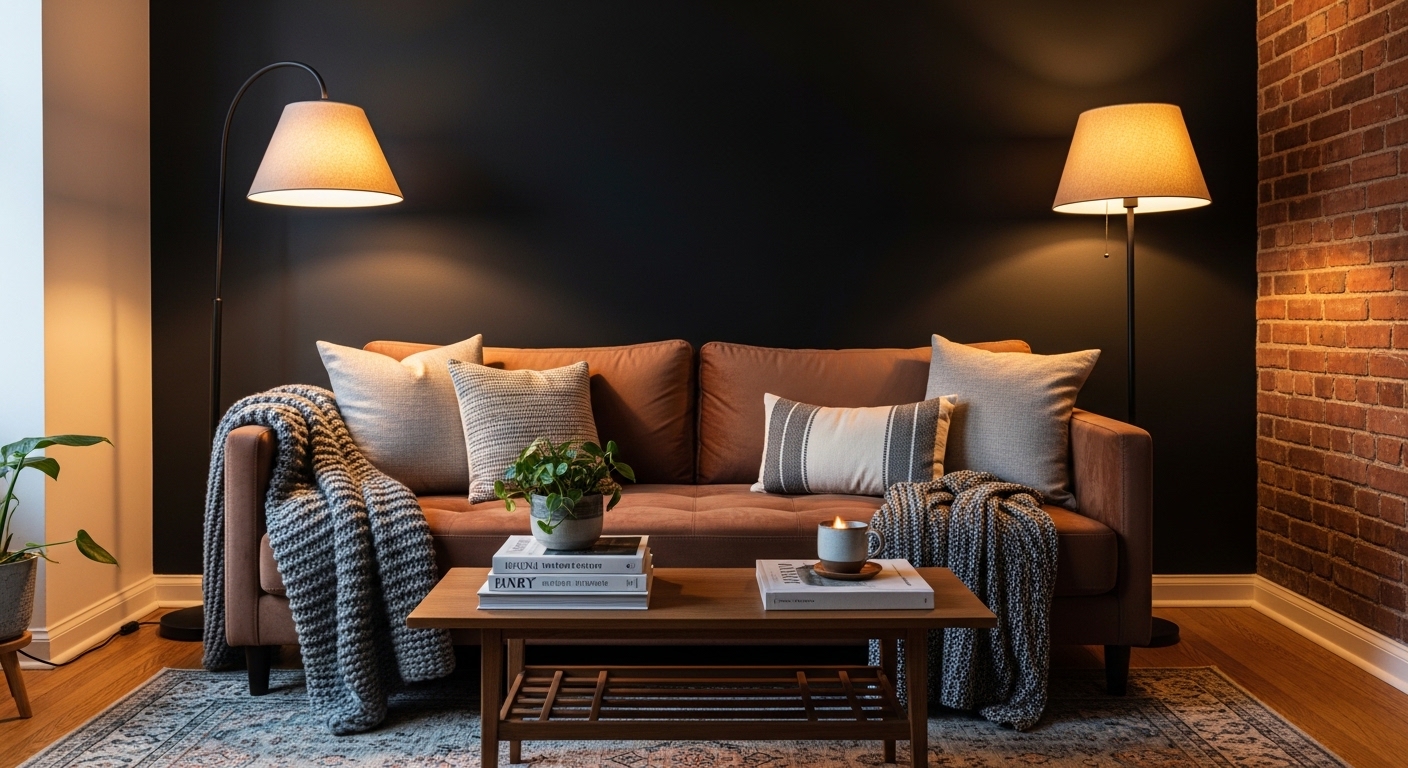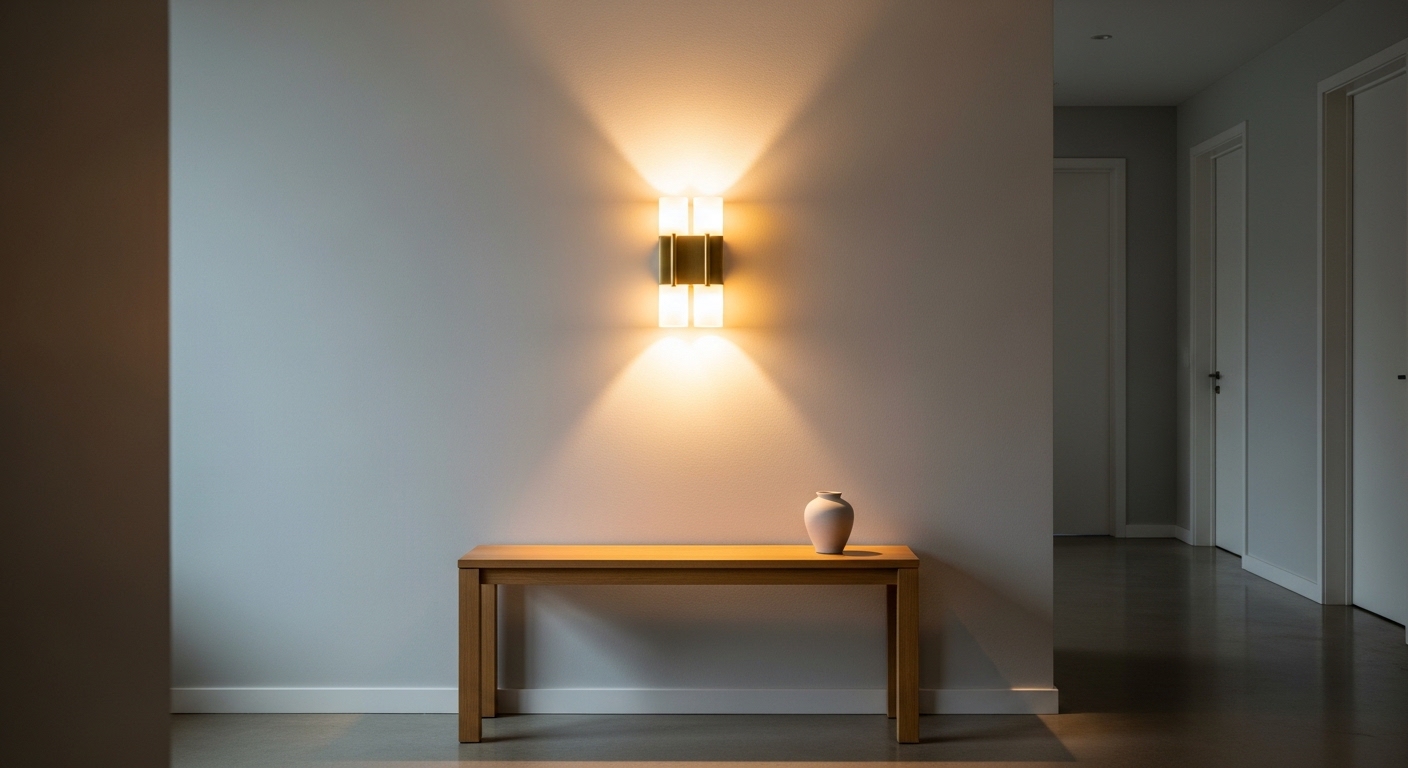
How to choose a lamp that lasts comes down to four checks that a $30 lamp fails and a $120 lamp passes: a base that doesn't tip when the cord is pulled, a shade that diffuses instead of glaring, a switch that will survive a thousand clicks, and a socket that takes a standard bulb you can replace. I bought a $30 lamp for every apartment for three years, and I've replaced every one of them, which adds up to more than the good lamps I own now; the last cheap one fell off a side table when the cord caught my foot, and the one before it had a shade that yellowed in a summer. This post is the four checks and how to run them in a shop, the cost arithmetic over five years, the lamps I own now and what they cost, the shade and the bulb that matter more than the base, the secondhand route, the lamps worth buying cheap, the ones that never are, what the cord and the switch tell you, the weight rule, the lamp as an object in a small apartment, mistakes, and what I'd buy first with $150.
Check one: the base and the tip test
Pull the cord, gently, from 3 feet away, at the angle it'd be pulled by a foot or a vacuum; a lamp that slides or tips fails, and most $30 lamps do, because their base is a hollow shell with a plastic weight. A good table lamp has a base heavy enough that the cord pull moves the cord and not the lamp: a ceramic base, a solid metal one, or a wood one with a weighted foot. Lift it; a 20-inch table lamp should weigh 4 pounds or more, and a floor lamp's base should be the heaviest part of it. The lamp that fell off the side table weighed 1.5 pounds and had a felt pad on nothing.
Check two: the shade
Hold a hand inside it and look at it from sofa height, seated, which is where you'll see it. A shade you can see the bulb through, a thin paper or a translucent plastic, is glare, and glare is what makes cheap lamps feel cheap; a linen or a thick paper shade, lined, that shows the bulb as a glow and not a point, is the thing that separates a lamp that lights a room from a lamp that lights itself. Shade width at least the base's height; shade bottom at seated eye level, 40 to 42 inches from the floor with the table, so the bulb is hidden sitting down. The layers post is where the shades sit in the room.
Check three: the switch
Click it twenty times in the shop. A rotary switch on the socket, metal, is the one that lasts; a plastic inline rocker on the cord lasts a year; a touch base lasts until the first power surge. A lamp with a bad switch is a lamp you'll operate at the plug, and then it's a lamp on a smart plug, which is fine but is $12 you didn't budget. The switch is the part a cheap lamp saves most on and the part you use most.
Check four: the socket and the bulb
A standard E26 socket that takes any bulb, so the bulb can be a 2700K dimmable LED of your choosing and can be replaced in ten years; not an integrated LED you can't replace, which is a lamp with a lifespan, and not a candelabra socket that takes a small bulb nobody stocks. The bulb is where the light quality lives, and a lamp that takes a good bulb is a lamp that can be improved; a lamp with a built-in LED at 4000K is a lamp that can't. The portable setup post is the bulbs I run in every lamp.
The arithmetic
Three years of $30 lamps, replaced every twelve to eighteen months across two apartments, was six lamps and $180, plus two shades and a bulb type nobody stocked. The ceramic table lamp I bought after was $110 and is in its fifth year and its third apartment. The arc lamp was $180 and is in its fourth. A good lamp costs three to four cheap ones and outlasts ten of them, and it also looks like a lamp for all of those years, which the cheap ones didn't manage for one.
The lamps I own now
A ceramic table lamp, 22 inches, on the console, with a linen drum shade, $110. An arc floor lamp, brass and black, over the sofa's end, $180. A small task lamp at the desk, 3000K, $35, which is the exception below. A rechargeable lamp on the kitchen shelf, $48. And the two plug-in sconces, which aren't lamps but do a lamp's work at the bed, $96 the pair. About $470 for every light I own that isn't the landlord's, across five years, and all of it has moved at least twice.
The shade and the bulb matter more than the base
A $60 lamp with a good linen shade and a 2700K dimmable bulb lights a room better than a $200 lamp with a thin shade and the bulb it came with; the base is what you look at and the shade and bulb are what you see by. If the budget is tight, buy a plain lamp with the right weight and socket, and spend $25 on a better shade and $6 on the right bulb, and it'll read as a lamp twice its price. Shades are sold separately and fit a standard harp, and swapping one is the cheapest upgrade in this post.
Secondhand, which is where the good lamps are
A ceramic lamp from the 1970s with a good base is $20 at an estate sale and passes every check; the shade will need replacing and the cord may need a $9 rewire kit, which takes twenty minutes and a screwdriver. Two of my lamps are secondhand, and they're the two that get asked about. The check for a secondhand lamp is the socket and the cord: a cracked cord is a rewire, a ceramic socket is a keeper, and a base that passes the tip test is a base that'll pass it for another forty years.
The lamps worth buying cheap
A task lamp at the desk, which is a tool: a $35 metal one with an adjustable arm and a 3000K bulb does the job and gets replaced when it dies. A clip lamp for a bookshelf. A rechargeable puck under a cabinet. The rule is that a lamp you look at should be a good one and a lamp you look with can be cheap, and the desk lamp is the one you look with.
The ones that never are
The table lamp in the living room, which is the object in the room the eye lands on at night and the one guests touch. The bedside light, which gets used every night for years. The floor lamp, which is the tallest thing in the room and has the most to fall over. A cheap lamp in any of those three places is a cheap room, and it's also the lamp that'll be replaced, which is the arithmetic above.
What the cord and the switch tell you
A fabric-covered cord is a sign the maker spent money where it doesn't show. A cord over 6 feet means the lamp can sit where it should and not where the outlet is. A polarized plug and a UL mark on the socket are the minimum. An inline switch 12 inches from the lamp is fine and one at the plug is a lamp designed to be left on. The cord is the part of a lamp that's hardest to hide in a small apartment and the part that tells you most about the rest of it.
The weight rule
A lamp should weigh more than its shade looks, and more than a cat. Table lamp, 4 pounds and up; floor lamp, 10 pounds with most of it in the base; a lamp on a bookshelf, heavier than the books beside it. Weight is stability, and stability in a 480-square-foot apartment where every lamp is within a foot of a walkway is the difference between a lamp and a lamp on the floor. The four cheap lamps that broke all broke by falling.
The lamp as an object
In a small apartment a lamp is a third of what's on any surface, and it's the one thing on the console that's there in the day too; a lamp with a shape, a ceramic base with a glaze, a brass stem, is the object a designer would put there if there were no light in it. Two metals, black and brass, and the lamps match the sconces and the frames, which is the repetition rule from the design post. A lamp that only looks like a lamp when it's on is a lamp that's ugly for twelve hours a day.
Floor lamps, which have their own checks
A floor lamp adds two checks: the base diameter, at least 10 inches for a straight lamp and a weighted 14 for an arc, and the joint, because a floor lamp with an adjustable arm has a joint that a cheap one makes of plastic and that sags in a year. Stand it up, push the top sideways with one finger, and it should rock back and not walk; an arc lamp's base should be too heavy to lift with one hand. The arc lamp over my sofa has a 30-pound marble base and a steel arm, and it's the only lamp in the apartment that can't be knocked over by anything smaller than a mover. The $40 arc lamps with a hollow base are the lamps that end up leaning in the corner.
Bedside lamps, and why mine are on the wall
A bedside lamp is the lamp used most and knocked most, on a nightstand 18 inches wide with a phone and a glass of water; the tip test is the whole check, and most bedside lamps fail it because they're tall and narrow to fit the table. The fix in my apartment was to take the lamp off the table entirely: a plug-in sconce at 60 inches on strips, which can't be knocked over because it's on the wall, frees the whole nightstand and lasts as long as the bulb. If it has to be a lamp, a short, wide, heavy one, 16 inches and 4 pounds, with the switch on the socket where a hand can find it in the dark.
Mistakes
Six $30 lamps. A lamp with an integrated LED at 4000K that couldn't be fixed. A touch lamp that came on at 3 am after a storm. A thin-shade lamp on the console that lit the ceiling and my eyes and nothing else. Buying a lamp online without the tip test, which is how the one on the side table happened. And a lamp bought for the bedroom that was too tall for the nightstand, which is why the bed has sconces now.
Buying online, which skips the shop checks
Weight in the listing, and if it's not there, the lamp is light. Shade material named, linen or paper, lined or not; "fabric" means thin. Socket type named, E26, and a photo of the switch. Reviews sorted by date and read for the words "tipped," "flimsy" and "yellowed." And a return window long enough to run the tip test at home, which is the shop check done in the living room with the cord and a foot. Two of my lamps were bought online, both from listings with the weight in pounds, and both passed.
In one paragraph
Pull the cord, and the lamp shouldn't move. Look at the shade from the sofa, and the bulb shouldn't show. Click the switch twenty times. Check the socket takes a standard bulb. Then spend on the shade and the bulb before the base, buy secondhand if you can, buy the desk lamp cheap and the living room lamp well, and stop buying the $30 one, because it's $180 by the third year and it's on the floor.
What I'd buy first with $150
A secondhand ceramic table lamp with a good base, $25, a new linen drum shade, $30, a 2700K dimmable bulb, $6, and a plug-in dimmer, $14: a living room lamp for $75 that passes every check and looks like $200. Then a plug-in wall sconce for the bed, $48, with strips, which is the second-most-used light in any apartment and the one a cheap lamp fails at first. $135, two lights, and the next $150 is the arc lamp, which is the one that takes the longest to save for and the one that stays.
Shop this post: plug-in wall sconces and rechargeable wall sconces, the bedside light that outlasts a table lamp