A sofa for a small apartment has to pass three measurements before you're allowed to like it: the door, the stairs and the elevator it has to get through; the room, where it should take no more than a third of the width; and the diagonal, height plus depth divided by 1.4, which is what has to clear the turn in the stairwell. The first sofa I bought for my apartment took six hours to get through the door, and it was a lovely, enormous, completely wrong choice; my building has a staircase that turns 90 degrees on every floor and the sofa did not, and that sofa is now in my sister's house in New Jersey, where she bought it from me for $100 and a lot of guilt. This post is the three measurements with the arithmetic, the scale rule and what it does to a room, depth and seat height and why they matter more than width, arms and legs and what each does to the visual weight, sofa beds and the ones that work, the loveseat and the apartment sofa and the modular, fabric for a small apartment, the sofa's back as a wall, the lighting trick that makes a right-sized sofa look right, delivery day, what the two sofas cost, mistakes, and the sofa I have now.
Measurement one: the way in
Door opening, width and height, with the door open and any door stop counted. Hallway width at its narrowest, which is usually at a radiator. Staircase width, and the turn: the width of the landing and the height to the ceiling at the turn. Elevator dimensions, door and cab, and the diagonal of the cab if it's small. Then the sofa's diagonal: its height plus its depth, divided by 1.4, which is the shortest dimension it presents when tipped on end and turned through a corner, and it's the minimum clearance you need at the stairwell turn. My stairs turn in a 36-inch landing; the first sofa's diagonal was 41 inches; the six hours were the movers taking the legs off, the back cushions out, and finally a door off its hinges. Measure the way in before the room.
Measurement two: the room, and the one-third rule
In a small apartment a sofa should take no more than one-third of the room's width, so a living room 12 feet wide takes a sofa no wider than 4 feet, or 48 inches; most sofas are 72 to 96, which is the whole problem. Do the arithmetic before you fall in love with something online. The one-third rule leaves two-thirds of the wall for a chair, a lamp, a path and air, and the sofa reads as a piece of furniture in a room rather than the room; my living area is 11 feet wide and the sofa is 62 inches, which is over the rule by 18 inches and works because it's the only seating on that wall and the chair is on the adjacent one. The rule is a ceiling to argue with, not a law.
Measurement three: depth and seat height
Depth matters more than width in a small room, because a deep sofa, 40 inches and up, pushes the coffee table toward the far wall and eats the walkway; 34 to 36 inches deep is the apartment depth, and it's also the depth at which most people can sit with their feet on the floor. Seat height 17 to 19 inches, so the coffee table can be within 2 inches of it. Overall height under 34 inches, so the sofa sits below the window sill and doesn't block a wall's worth of daylight, which in a north-facing apartment is the daylight. A sofa with a low back and a shallow seat looks smaller than its width, which is the trick most "apartment sofas" use.
Arms and legs, and visual weight
Thin arms, 4 to 6 inches, give 8 inches more seat in the same width than rolled arms at 10 each; track arms or no arms at all are the small-apartment choice. Legs: a sofa on 6-inch legs with the floor visible underneath reads as lighter than the same sofa on a skirt, because the eye sees floor through it; every sofa I've owned since the first has had legs. A tight back, no loose cushions, is neater and 4 inches shallower than a pillow back. The wrong sofa is a rolled-arm, skirted, pillow-back 90-inch thing that is the same sofa the catalog photographs in a 20-foot room, and it's the one I bought first.
Sofa beds, and the ones that work
A sofa bed in a small apartment is the guest room, and the ones that work are the ones with a real mattress, foam or a pocket-spring, at least 4 inches thick, in a mechanism that unfolds in two motions without moving the coffee table; the ones that don't are the click-clack futons and the thin-mattress pullouts that a guest feels the bar of. Mine is a two-seat sofa bed with a 5-inch foam mattress, 62 inches wide, and a friend from Portland slept on it for four nights and called it a boutique hotel, which is in the guest post. The sofa bed's depth is 38, deeper than the rule, and it's the compromise a guest room in 480 square feet makes.
Loveseat, apartment sofa, modular
A loveseat is 52 to 64 inches, seats two, and is the right size for a room under 12 feet, and it's the word that makes people feel they're settling. An "apartment sofa" is the industry's name for a 70 to 78 inch sofa with thin arms and a shallow seat, and it's the right size for a room of 12 to 14 feet. A modular in two or three pieces gets through any stairwell and can be an L in one apartment and a straight sofa in the next, which for someone who's moved four times is the argument; the cost is that modulars look like modulars. A chair and a half beside a loveseat seats three and is more flexible than a three-seat sofa in the same footprint.
Fabric
A performance fabric or a tight-weave cotton in a mid-tone, oatmeal or grey, that hides the life a sofa in a small apartment lives, which is everything; a slipcover if the sofa is white, which it shouldn't be in a 480-square-foot apartment where it's also the dining chair and the office; leather if the budget allows, because it wipes and ages. Velvet in a small apartment is a fabric that shows every sit and every cat, and a pattern makes a small sofa look bigger and busier. The oatmeal on mine has survived two years of sourdough and a friend's red wine, and the slipcover on the first one didn't survive a move.
The sofa's back as a wall
In a studio or an open apartment, the sofa's back is the only wall you own: facing it away from the bed makes a living room, a console behind it makes an entry, and a rug under its front legs makes a zone. A sofa with a finished back, not a plain one meant to go against a wall, is the choice for an apartment where it floats; the studio zones post is the whole system, and the sofa's back is the first wall in it.
The lighting trick for scaled furniture
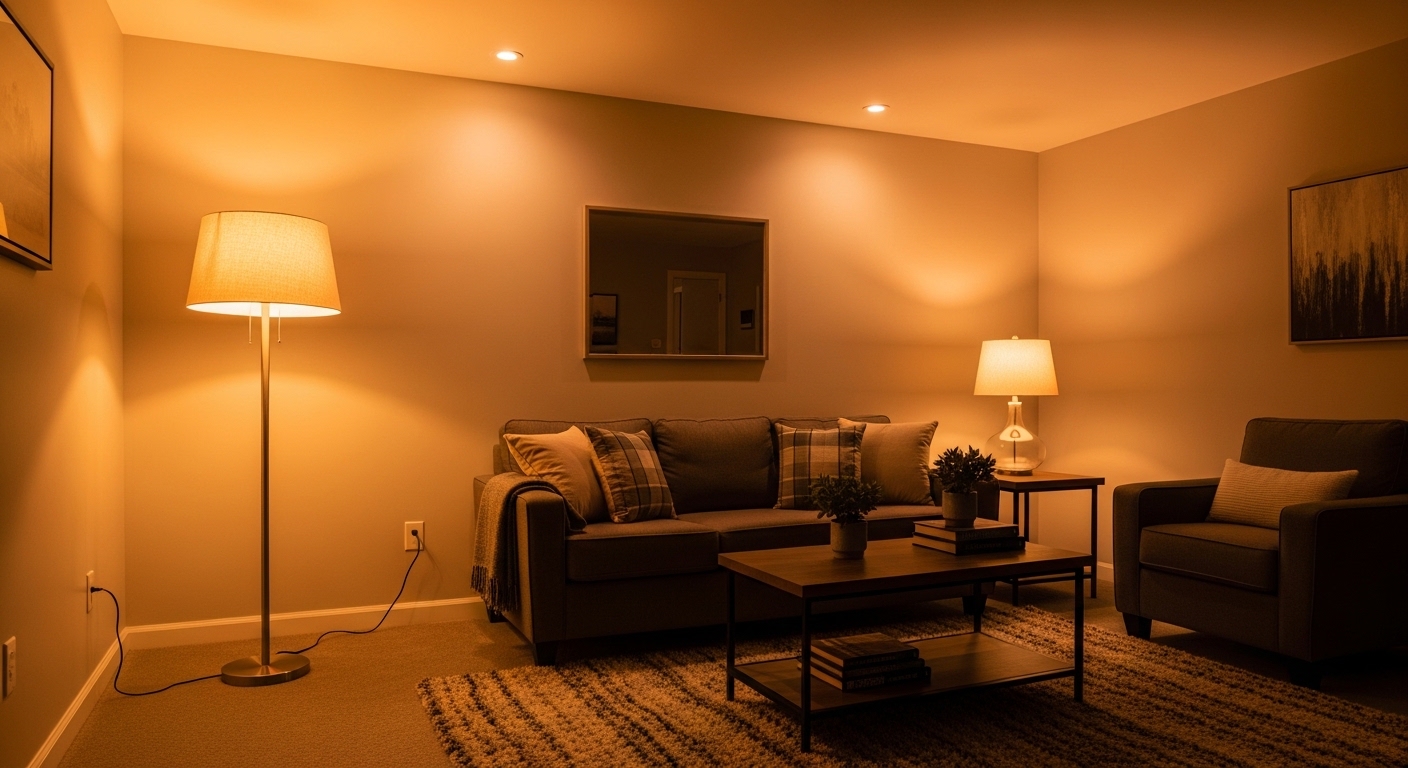
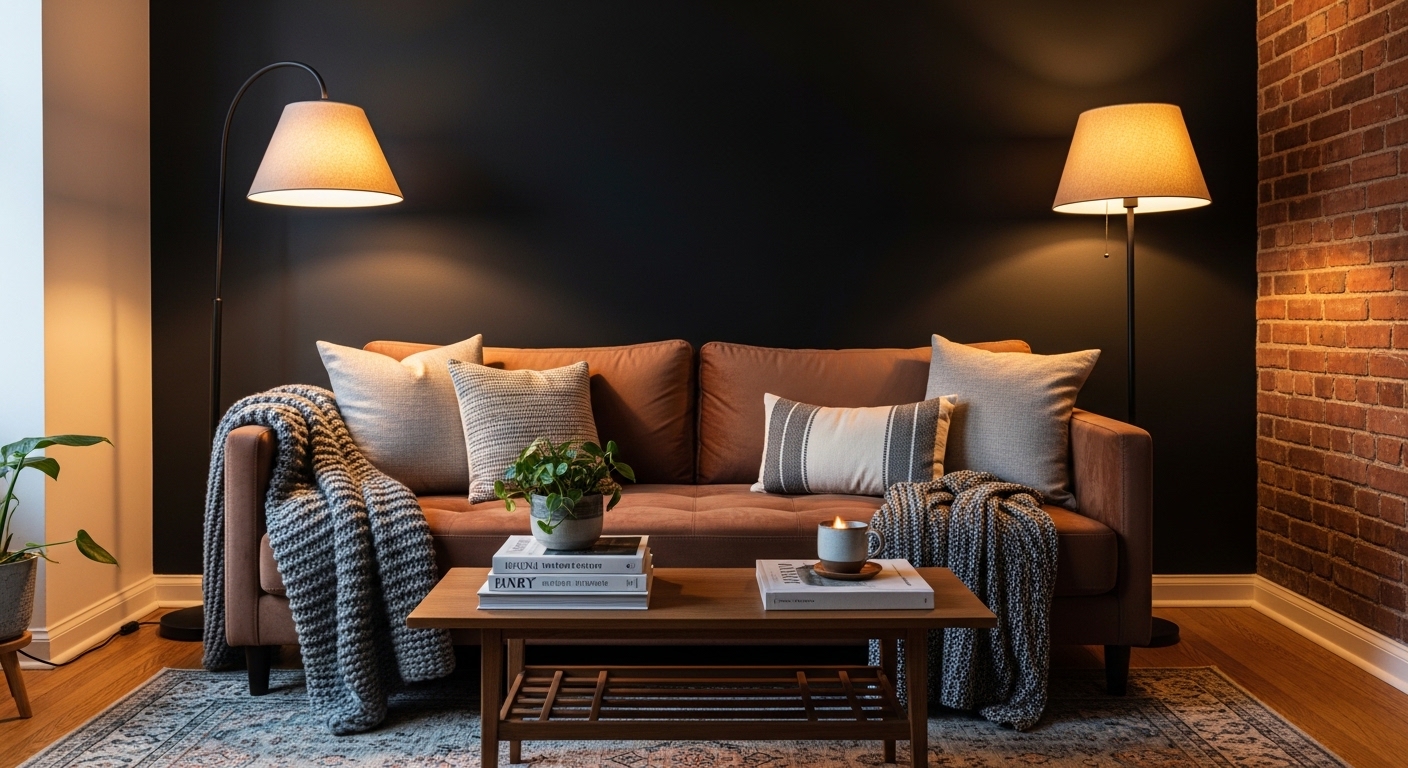
A pendant or a floor lamp positioned near a right-sized sofa makes it look intentional and less crowded, because light draws the eye upward and creates the impression of height and space around the furniture; a 62-inch sofa under a bare wall looks small, and the same sofa with an arc lamp curving over its end and a sconce at 62 inches beside it looks like a seating area. The arc lamp fills the vertical space the sofa doesn't, and it's the reason the sofa can be small. The floor lamp post is which lamp and where.
Secondhand sofas, and the extra measurement
The best sofa for a small apartment is often a secondhand one, because the loveseats and apartment sofas of the last twenty years are the right size and were sold to people who then bought the 90-inch catalog sofa; a listing photographed in someone's room tells you more about scale than a catalog does. The extra measurement is the seller's stairs, which you're carrying it down, and the cushions, which you're pressing to see if the foam has gone. Two of my four apartments had secondhand sofas, one of them the one that didn't fit, which is the part of this post that's not the sofa's fault.
Color, and the sofa as the biggest object in the palette
The sofa is the largest soft thing in a small apartment and it sets the palette: oatmeal, grey or a muddy tone, and the wall, the rug and the throw work around it. A colored sofa, green, blue, rust, is the one big decision in the room and it means everything else is neutral; a patterned sofa in 480 square feet is a decision made every day. The design lessons post is the three-color palette, and the sofa is the first color chosen because it's the one you'll live with through three more apartments.
Delivery day
Legs off, in a bag, before the sofa leaves the shop. Back cushions off if they detach. The door taken off its hinges if the measurement was within 2 inches, which takes ten minutes and saves an hour. Two people, and a third at the turn. The building's freight elevator booked if there is one, which in my building there isn't, which is why the diagonal is the number I know by heart. The second sofa came up the stairs in twenty minutes with the legs in my bag, and the movers asked how I'd known it would fit.
What the two sofas cost
The first, 86 inches, rolled arms, skirted, $1,100, plus $180 of movers for six hours, sold to my sister for $100. The second, 62 inches, track arms, on legs, a sofa bed with a real mattress, $890, delivered up the stairs in twenty minutes for the standard fee. A $1,180 lesson in three measurements, and the sofa that fit was the cheaper one.
The chair, which is the other half of the seating
A right-sized sofa seats two, and the third seat is a chair, 28 to 32 inches wide, on the adjacent wall at an angle, which reads as a conversation and not a row. The chair can be the one piece with a color or a shape, because it's small; mine is a rattan armchair that weighs 12 pounds and moves to the desk when the desk needs it. A sofa and a chair beat a sectional in any room under 14 feet, and they beat it on the stairs by a distance.
Mistakes
Buying for the catalog room, not mine. Not measuring the stairwell turn. Rolled arms, which are 20 inches of the sofa that nobody sits on. A skirt, which hid the floor and made the sofa a block. A white slipcover in an apartment where the sofa is also the office. And measuring the room's width and not the sofa's depth, which put the first sofa's front edge 18 inches from the television.
The card
Door width and height. Hall at the radiator. Stair width and landing. Ceiling height at the turn. Elevator cab and door. Room width, divided by three. Sofa width, depth, height; diagonal equals height plus depth over 1.4, and it must be less than the landing. Seat height 17 to 19. Arms under 6 inches. Legs, not a skirt. It's on the inside of my phone case, and it's been read in three furniture shops by people who didn't believe it until the stairs.
The sofa I have now
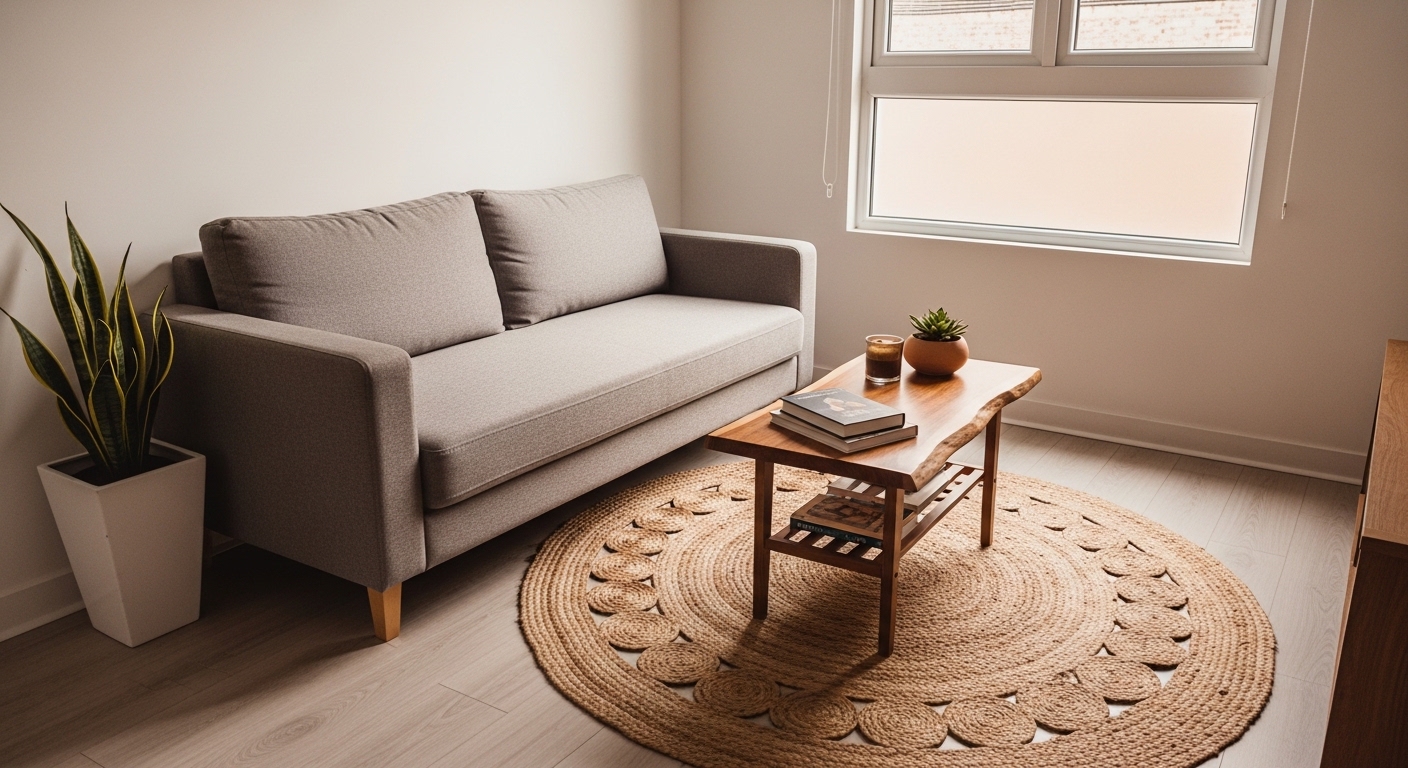
Sixty-two inches, 36 deep, 32 high, track arms, oak legs, oatmeal performance fabric, a sofa bed with a 5-inch mattress, on a rug with a console behind it and an arc lamp over its end, taking a third and a half of an 11-foot wall. It came up a 36-inch staircase turn in twenty minutes. It seats two and sleeps one and is the only sofa I've owned that fits the room it's in, and the reason is that I measured the door before I looked at a single sofa.
Shop this post: wall sconces for beside the sofa, which draw the eye up and make a small sofa look placed