My moving into a new apartment checklist starts with the lighting, before boxes, before furniture, before anything, because the first night's light sets the emotional tone of a place and a dark rental on night one is a rental you resent by week two. I've moved four times in five years, through three cities, and the protocol is the same every time: audit every fixture in the empty apartment, swap every bulb to 2700K, unpack the floor lamp first, mount the bedside sconces before the bed's made, and only then open a box of plates. This post is the 48-hour checklist with the hours, the audit and what to photograph, the bulb swap and why it's the best twenty minutes of any move, the first-night essentials, the second day's kitchen and bathroom, the things I do before the movers arrive, the things that wait a month, the landlord notes to take on day one, the box of lighting that travels with me, what I've learned about each of the four apartments in the first hour, mistakes, and the cost of the first 48 hours.
Before the movers: the box that travels in the car
One box, labeled, in the car and not the truck: the floor lamp's bulb and shade, the two plug-in sconces with their strips and cord channel, a pack of 2700K bulbs, a plug-in dimmer, a smart plug, a screwdriver, painter's tape, a tape measure, rubbing alcohol and a cloth, a phone charger, and the kettle. Everything needed for the first 48 hours' light and the first coffee, and nothing that can be in a truck that arrives late, which one of them did. The portable setup post is the lamp and sconces that have made four moves; the box is how they arrive first.
Hour one: the audit
I turn on every single light in the empty apartment and evaluate it. Which fixtures are terrible and which are salvageable with a bulb swap. Where the dead zones are: dark corners, a counter with no light, a bathroom with only an overhead. Which outlets are where, because the sconces and the lamps need them and the outlet map decides the furniture. I photograph everything, fixtures and outlets and the meter reading and every existing mark on the walls, which is the landlord note below. Twenty minutes in an empty apartment, and I know where the light will need to go before I know where the sofa goes; the sofa follows the light.
Hour two: the bulb swap
Every bulb in the apartment gets replaced with a 2700K warm white LED, from the box, including the ones in fixtures I'll never use. It takes about twenty minutes, the apartment immediately looks warmer, more livable, more like a home, and it's the most efficient investment of time in any move. Landlord bulbs are 4000K or a mix, and a mixed apartment looks incoherent in a way nobody can name. The old bulbs go in a bag in the closet for move-out, which no landlord has ever asked for.
Hours three to six: the first-night essentials
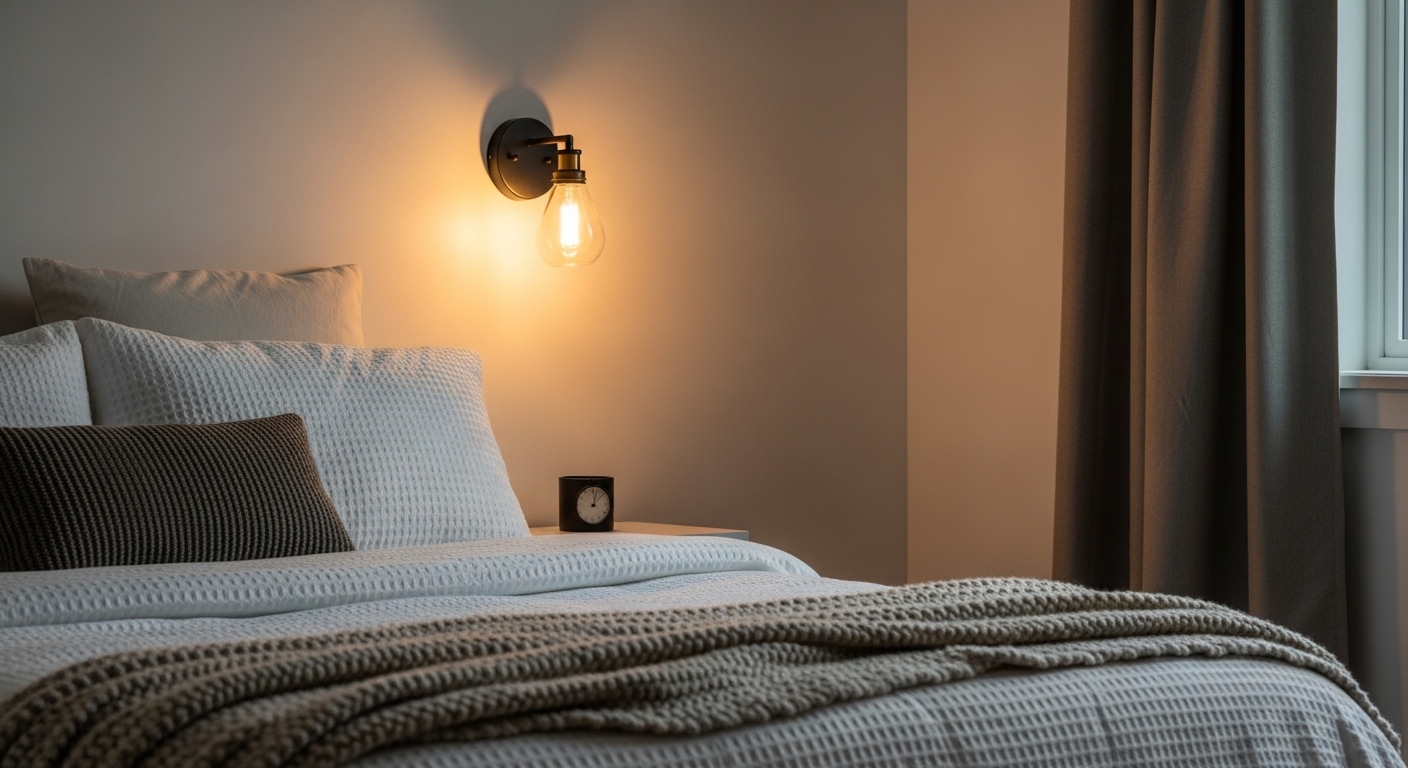
The floor lamp first: it goes in the corner of the main living area and handles ambient light until I know where the furniture goes. Then the two bedside sconces, mounted before anything else in the bedroom, at 60 inches, on strips, with the cord channel, on the dimmer; I need those for the first night, and I never sleep in a new apartment without my sconces on the wall. Then the bed, made. Then the kettle and one mug. Everything else can wait; the first night in a rental with the floor lamp on low and the sconces at the bed is a night in a home, and the first night under a ceiling light with boxes is a night in a storage unit.
The first evening, which is a test
Ceiling lights off. Floor lamp at 40 percent, sconces at 30, and sit on the floor with the takeout and look at the room. The room tells you where the dark corners are, where the second lamp will go, and whether the ceiling fixture in the living room is one to keep on a dimmer or one to leave off forever. I've made every furniture decision in every apartment on that floor with a box of noodles and two lamps on, and the layout has never changed after.
Day two: the kitchen and the bathroom
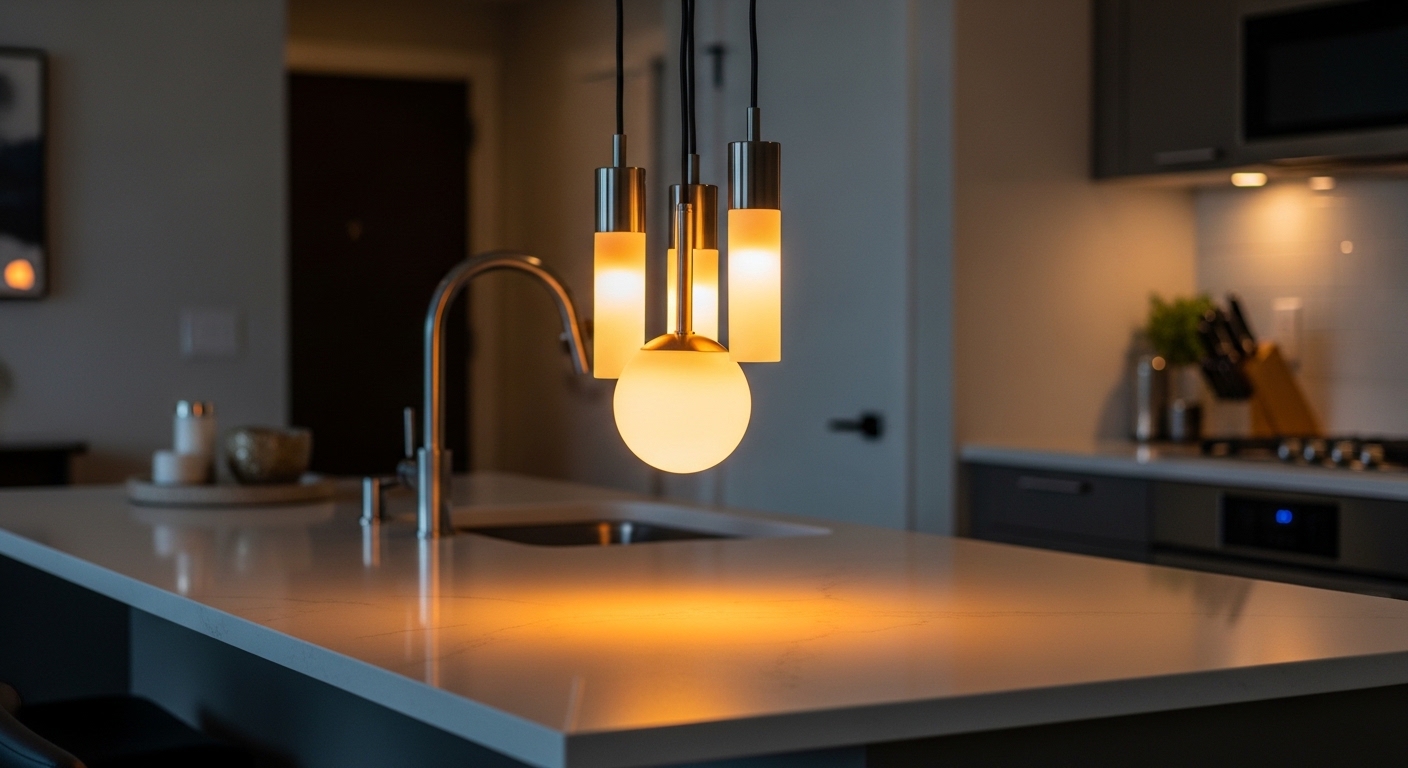
Morning: the LED strip under the kitchen cabinet, plugged into the outlet inside the cabinet, and a 2700K bulb in the range hood if there is one; twenty minutes, and the counter is lit before the first meal is cooked. The plug-in sconce beside the bathroom mirror on strips at 63 inches, 3000K, which is the $40 upgrade and which makes the first shower's mirror a mirror. Afternoon: the swag hook for the pendant over the counter or the table, if the ceiling has a joist where I need one. By day two's evening every task point in the apartment is lit, and the boxes with the plates are still taped.
The rest of the standard checklist, which everyone else's post is about
Utilities switched on before the day: electric, gas, internet, with the internet appointment booked two weeks out because it's the one that slips. Address changed at the bank, the post office, the employer, the voter roll. Renter's insurance active from day one. The locks: ask the landlord whether they were changed, and if not, ask. A first-week shopping list on the fridge: toilet paper, soap, a shower curtain, trash bags, a plunger, a first-aid kit, the things that are in every other apartment and none of your boxes. And the boxes labeled by room and by day, with "day one" boxes at the front of the truck. All of it matters and none of it is what makes the first night feel like home, which is why it's the second section and not the first.
Measuring on day one, for the furniture that hasn't arrived
Painter's tape on the floor for the sofa's footprint, the bed's, the desk's, from the measurements taken at the viewing, and a walk around them with the lamps on; the tape shows whether the walkway is 30 inches and whether the sofa's back can float. The outlet map from the audit decides which wall the sofa faces, because the arc lamp has to reach a plug and so do the sconces. Twenty minutes with the tape on an empty floor, and the furniture goes where the tape is, once, which in a building with a 90-degree stair turn is the only number of times you want to move a sofa.
The landlord notes on day one
Photographs of every wall, every floor, every fixture, the inside of every cabinet and the meter, dated, sent to myself and to the landlord in one email as the move-in condition. Every nail hole, every scuff, every stain, before a box touches the floor. It's twenty minutes and it's the deposit; the one apartment where I skipped it is the one where I paid for a wall I hadn't marked. The renter lighting rules post is what I do to the walls after, and it's all on strips.
What waits a month
Art and the gallery wall, because the templates need a day and the strips need 72 hours and the wall needs to be chosen. The rug, until the furniture is placed and the floor has shown its scuffs. The second lamp, until the first evening's test says where. Curtains, until the window's light has been watched for a week. Plants, until the light has been read. The kitchen pendant's final position, until I've cooked there ten times. A month of living with the floor lamp and the sconces is a month of the apartment telling you what it needs, and everything bought in the first week is bought for the wrong room.
What I've learned in the first hour of each apartment
The studio: that the ceiling light was the only light and had to be ignored. The second apartment: that the bedroom outlet was on the wrong wall, which is why one sconce there was rechargeable. The third: that the kitchen had an outlet inside the cabinet, which I'd never looked for before. This one, the 480-square-foot apartment: that the living room's only outlet on the sofa wall was 6 inches from where the arc lamp needed to be, which is the closest an outlet has ever been to right, and the reason the layout took an evening. Every apartment's first hour told me something the listing didn't, and every time it was where the outlets were.
The checklist, in order
Car box packed. Condition photos, every wall. Audit every fixture, photograph the outlets. Bulbs to 2700K, all of them. Floor lamp in the main corner. Sconces at the bed. Bed made. Kettle. First evening on the floor with the lamps low. Day two: kitchen strip, bathroom sconce, swag hook. Then the boxes. Then a month. It's on a card in the car box, and it's the same card for four apartments.
The first week: what gets unpacked in what order
Day three, the kitchen: plates, two pans, the coffee things, and the rest of the kitchen boxes stay taped until the shelf and the counter light have shown where things go. Day four, the closet and the bathroom cabinet, because clothes on the floor is the thing that makes an apartment feel unmoved-in. Day five, the desk, because work resumes. The books and the art and the decorative boxes last, and the gallery wall's templates go up on day seven and the frames on day ten. A week of a half-unpacked apartment with good light is fine; a week of a fully unpacked apartment under a ceiling light is the thing this whole post exists to prevent.
Leaving the last apartment, which is the same list backwards
Sconces down by pulling the strip tabs straight, the cord channel off, spackle in any screw hole, the landlord's bulbs back in from the bag in the closet, the swag hook out and the hole filled, condition photos taken after cleaning and sent. An hour, and the lighting that made four apartments into homes is in the car box for the fifth, and the landlord's fixtures are the landlord's again. The renter lighting rules post is the list of what's allowed; the exit hour is the proof that all of it was reversible.
Mistakes
The first move, with the lamps in the truck, which arrived at 9 pm, and a first night under a 4000K ceiling light with the mattress on the floor, which is the night this protocol was written. Skipping the condition photos, once. Buying a rug in the first week, twice, for a floor plan that changed. And mounting the sconces before the bulb swap, once, so the bedroom was warm and the rest of the apartment was a hospital until morning; the bulbs go first because they're twenty minutes and they're everywhere.
In one paragraph
Lighting box in the car; condition photos; audit and outlet map; every bulb to 2700K; floor lamp in the corner; sconces at the bed; bed made; first evening on the floor with the lamps low; day two the kitchen strip and the bathroom sconce; then the boxes; then a month before buying anything for a wall. The apartment is a home on night one, and the sofa goes where the light says.
What the first 48 hours cost
A pack of 2700K bulbs, $18. Strips and a cord channel for the sconces, $12. The kitchen strip, $28. The bathroom sconce, if it's a new one, $40, and mine has moved three times. A swag hook, $9. Everything else is in the car box from the last apartment. Under $110 for an apartment that's lit like a home on night one, and the floor lamp and the two sconces that do most of it were bought once, five years ago, and have paid for themselves in four first nights.
Shop this post: plug-in wall sconces and rechargeable wall sconces, the bedside light that goes up before the bed