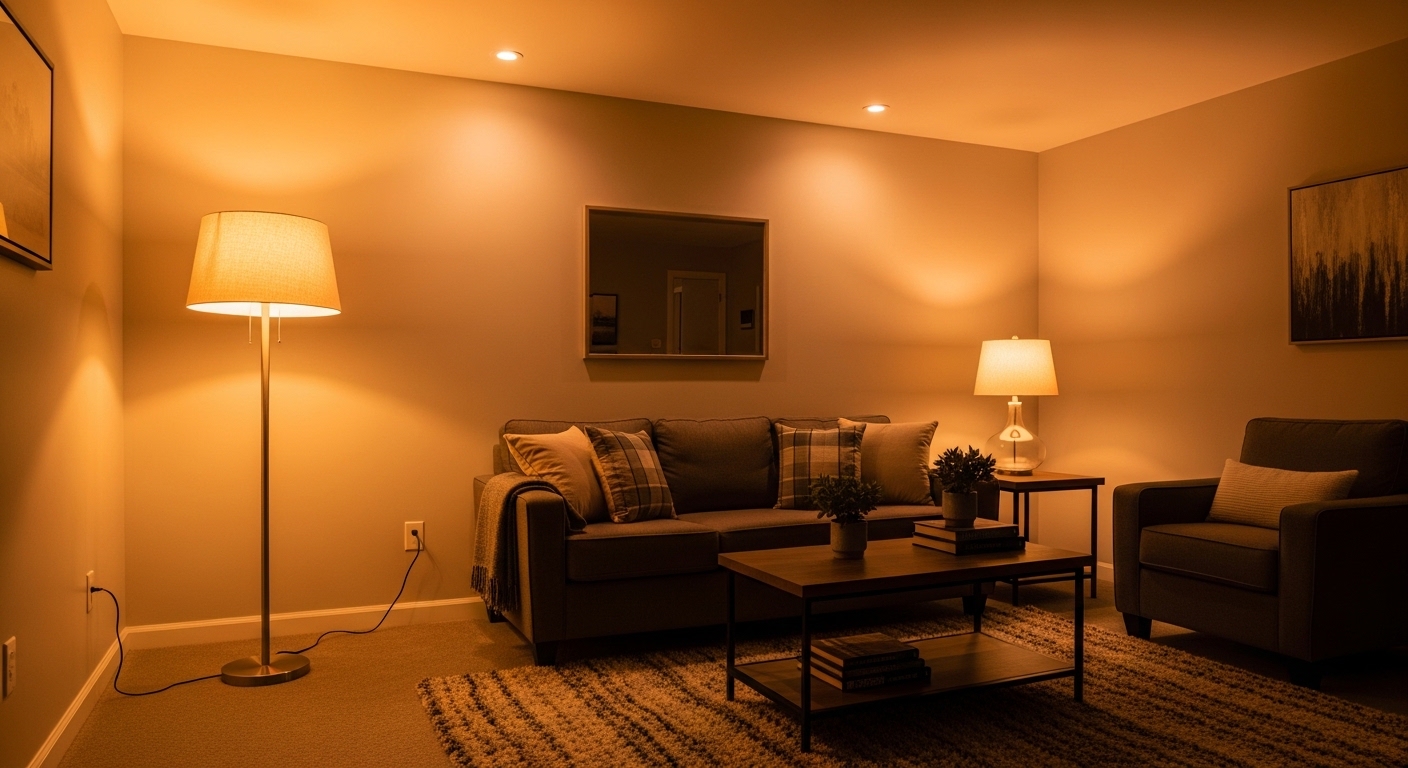
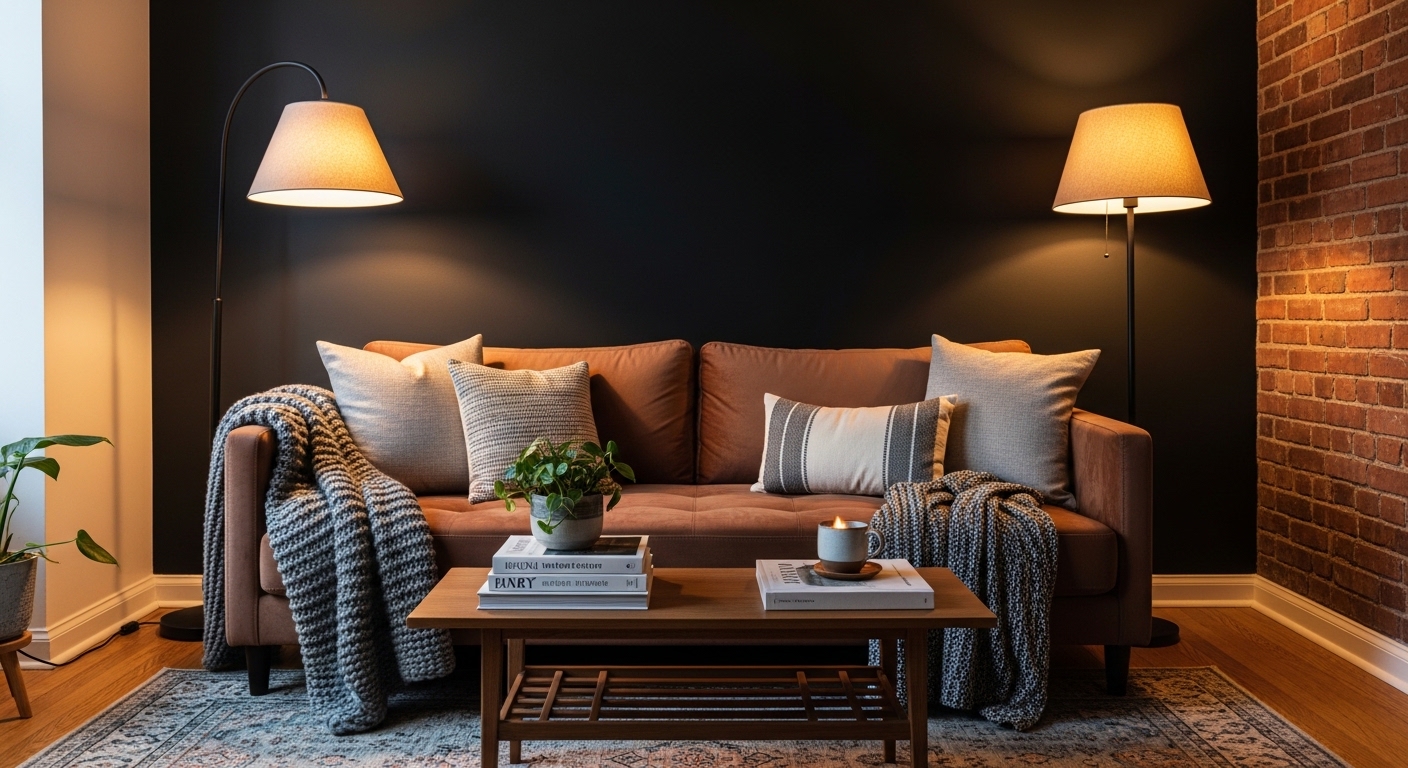
Apartment entryway ideas for apartments that don't have one come down to three objects that build an entry out of nothing: a console table 10 to 12 inches deep, a round mirror above it, and a plug-in wall sconce beside the mirror, for less than $200 total. In New York apartments "entryway" means the 18 inches between the door and where your living room begins; mine is a transition between the hallway and my sofa, with no buffer, and the trick is to make it feel like one anyway. Guests comment that the apartment has a real entry, and it's an illusion built from a $60 table and a lamp. This post is the three objects and why each one works, the console's depth and what lives on it, the mirror and what it does to the light, the sconce and its height and timer, the hooks and the mat and the rules about shoes, the entry in a studio with no wall, the entry that's also the kitchen, the dark hall, the landlord questions, the ideas from the lists that don't fit 18 inches, mistakes, and what it cost.
Why 18 inches can be an entry
An entry is a zone, not a room, and a zone needs a boundary, a surface and a light. The console is the boundary, a physical line that says the entry ends here and the living room starts; the surface is where the keys go, which is the entry's only real job; and the light is what makes it feel like a place rather than a strip of floor. With all three, walking in through the door and past the console is walking through a room, even though the room is 18 inches deep and the sofa is 4 feet away. It's the same idea as the zones in a studio, applied to the smallest possible zone.
The console table trick
A narrow console, and I mean narrow: 10 to 12 inches deep, 36 to 42 wide, 30 to 32 tall. Mine is 10 by 42, in oak, against the wall on the hinge side of the door. It creates a physical barrier that says entry zone, holds my keys, a plant and a small bowl for mail, and it doesn't eat any meaningful floor space; 10 inches from a wall in a hall people walk through sideways anyway. Legs, not a solid base, so the floor shows under it and the hall doesn't get narrower to the eye. A shelf below for a basket, which holds the things that come in and leave. $60 secondhand, and it's the object that made the entry exist.
What lives on it, and what doesn't
A ceramic bowl for keys, a small plant, and a dish for the mail that gets emptied on Sunday. Three things, and nothing else, because a console in an 18-inch entry becomes the apartment's dumping ground in a week if it's allowed to. The rule from the design post: one surface, three objects, hierarchy, and the plant is the tall one. Bags go on a hook, not the console; shoes go under the bench I don't have and so on a mat, below.
The mirror
A round mirror, 24 inches, above the console at 60 inches to center, which is a face's height and the height that doubles the sconce. The mirror reflects light from the sconce and from the living room's window, and makes the entry feel like it has depth in a place that has none; it's also the last check before the door. Round, because a rectangle in an 18-inch hall reads as a window into a wall and a circle reads as an object. On strips, two sets rated for the mirror's weight plus a hook for margin, which is the strips method at one frame.
The sconce, its height and its timer
A plug-in wall sconce beside the mirror at 66 inches to center, mounted on adhesive strips, cord run down the wall's corner in a channel to the outlet behind the console. 2700K, 400 lumens, on a smart plug that brings it on at dusk at 40 percent and off at midnight, so the light is on when I come home and on when a guest arrives. The light creates a warm landing point for the eye when you walk in, and it's what a guest sees first; a lamp on the console would do the same and take one of the three objects' places, which is why it's on the wall. The plug-in sconce guide is the mounting.
Hooks, the mat, and the shoes
Three hooks on the wall opposite the console at 66 inches, on strips, for the coat in use, the bag and a guest's coat; the rest in the closet. A flat-weave mat inside the door, 2 by 3, in a dark color, which is where wet shoes land and which defines the entry's floor. Shoes: two pairs on the mat and the rest in the closet, a rule that a New York apartment enforces by having nowhere else. No bench, because 18 inches; no shoe rack, because a shoe rack in an entry is a shoe shop.
The entry in a studio with no wall for a console
The bookshelf divider's end, as in my old studio, does the console's job: a hook strip on its side, a basket on its bottom shelf, the keys on its top. Or a console that floats, its back to the sofa, with the sofa's back and the console's back making the entry's wall. The mirror goes on the wall by the door and the sconce beside it, and the mat does the floor. The studio post is the divider; the entry is the smallest zone it makes.
The entry that's also the kitchen
Some apartments open into the kitchen, and the console is a counter's end or a narrow cart against the wall by the door, 12 inches deep, with the bowl and the plant. The sconce goes beside the door; the mirror, if there's wall, above the cart. The kitchen's strip light stays off in the evening and the sconce is what's on, so the first thing seen is a warm point and not the stove. A kitchen entry needs the three objects more, not less, because without them the front door opens into a room with a sink.
The dark hall
An entry with no window is an entry the sconce has to make, and the mirror doubles it. A warm-dimming bulb so the sconce is brighter at six and softer at eleven; a second small light, a rechargeable puck under the console's top shelf, for the keys on a dark morning; and a light-colored mat, because a dark mat in a dark hall is a hole. The entry in my apartment is the darkest 18 inches in it, and it reads as the warmest, which is entirely the sconce.
Landlord questions
Nothing here is screwed to anything: the mirror, the sconce and the hooks are on strips, the console stands, the mat lies. The cord channel is adhesive and paintable. It all comes down in fifteen minutes and comes to the next apartment, which it has, twice; the console has been the entry in three apartments and the divider's end in the fourth.
Entry ideas from the lists that don't fit 18 inches
A bench with storage, which is 16 inches deep and the whole entry. A hall tree, which is a coat rack with a bench with an opinion. Wallpaper on the entry wall, which is 18 inches of wallpaper. A runner, which is a rug in a place too short for a rug. A pendant over the entry, which is on the ceiling where the light shouldn't be. And a second console or a shoe cabinet, which is the mistake of treating 18 inches like a room; it's a zone, and a zone has three things.
The entry across four apartments
The studio's entry was the bookshelf's end and a mat, and the sconce came later, which is why the studio's door was the darkest place in it for a year. The second apartment had a real hall, 3 feet wide and 6 long, and the console fit it with a bench opposite, which was the only apartment where a bench has ever fit; the third opened into the kitchen and the cart did the console's job. This one is the 18 inches, and it's the entry that gets the most comments, because it's the one where the three objects have the least room and do the most. The lesson across four is that the entry doesn't scale with the space; it's the same three things at any size, and the bench is the only thing that comes and goes.
Scent, sound and the things that aren't objects
An entry is also what a guest smells and hears in the first second, and in an apartment with no hall that's the whole apartment. A small diffuser on the console's lower shelf, cedar in winter and something green in summer, on for an hour before a guest and off after; the sconce's timer means it's warm and the diffuser means it's an apartment that smells like a decision. A door that doesn't slam, which is a $4 felt bumper on the frame. And the coat hooks at a height a guest can reach without asking, which is the difference between an entry that hosts and one that's watched. None of it costs more than the mat, and it's the part of the entry that isn't in the photograph.
Seasonal changes, which are two
In October the mat changes to a thicker one for the boots and the hooks get a fourth for the heavier coats; the sconce's timer moves earlier with the dark. In April the mat goes back to the flat one, the fourth hook comes down, the plant on the console changes to something that can take the hall's light through summer. Two swaps a year, twenty minutes each, and the entry is an entry for the season without being redecorated, which in 18 inches would be a strange thing to do.
The entry at night, and in the morning
At night the sconce is the last light on, at 20 percent, and it's the light I lock the door by and the one a guest leaving sees on the way out; the living room is dark behind it. In the morning it's off and the console's bowl has the keys in it because the rule held; the mail dish has the mail because Sunday hasn't come. A dark morning in a north-facing apartment starts with the puck under the shelf and the keys found by feel, and a light morning starts with the mirror, which is the only reason the mirror is at 60 inches and not at the height that looks best over the console, which would be 4 inches higher.
What I'd tell a friend with 18 inches
Buy the console first and buy it narrow, 12 inches at most, and measure the door's swing before the wall. Put the mirror at your face's height and the sconce beside it on a timer, and you have an entry the day the strips cure. Then hooks, then the mat, then the bowl, and stop. It's a weekend and $230, and the apartment will read as having a hall for as long as you live in it, which for a renter is until the next one, where all of it comes too. The rule that matters is the third object: a console alone is a table, a console and a mirror is a hall table, and a console and a mirror and a light is an entry.
Mistakes
A console 16 inches deep, in the second apartment, that everyone hit with their hip. The mirror at 66 inches, above my face, for the first month. A lamp on the console, which took the plant's place and the console's surface. No timer for a year, and an entry that was dark every time I came home because the switch was past the sofa. And the bowl for keys that became the bowl for everything, until the mail dish and the Sunday rule.
What it cost
The console, $60 secondhand. The mirror, $45. The plug-in sconce, $48, and its strips and channel, $12. The smart plug, $10. Three hooks, $18. The mat, $22. The bowl and the dish, $16. About $230 for an entry that guests think is a room, in an apartment that has 18 inches for one, and $108 of it is the mirror and the sconce, which is the part that's the illusion.
Shop this post: entryway light fixtures and plug-in wall sconces that mount on strips