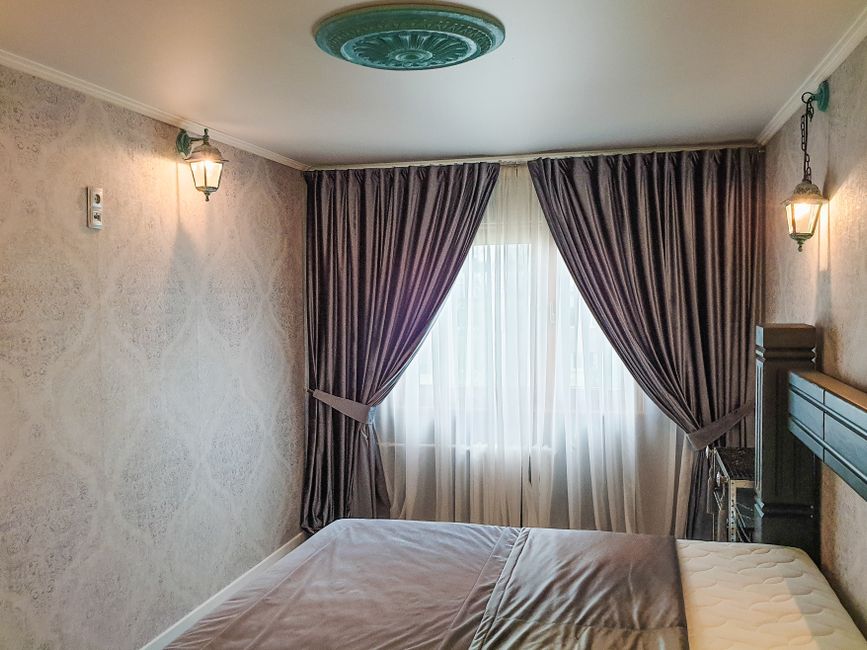
My current bedroom is 10 by 11 feet, which is pretty normal for a Seattle apartment built in the 1970s. It has one overhead light — a flush-mount ceiling fixture on a switch that does not have a dimmer — and one outlet on each wall. That's the canvas I had to work with. Three apartments and about four years into figuring out rental lighting, here's what I've learned.
The overhead fixture is the problem in almost every small rental bedroom. It's too bright at full power, it's at the wrong height to feel warm and cozy, and you can't dim it without replacing the switch (which usually requires a landlord call and approval). There are workarounds for all of this, and none of them involve drilling or rewiring.
Start With the Bulb in the Overhead
Before anything else: swap the overhead bulb to 2700K warm white. The original bulb in my fixture was a 5000K cool daylight — the kind that makes skin look grey and rooms look like a dentist office. A 2700K swap costs about $4 and changes the whole character of the space. Still too bright, still undimmed, but at least the color is right.
If you want dimming without touching the switch, there are smart bulbs with app dimming (Philips Hue, Govee) or simple in-line lamp dimmers that work on any lamp with a cord. The overhead switch stays on, but the smart bulb can be controlled to any brightness from your phone. I used this setup in my last apartment for two years.
Plug-In Sconces: The Rental Bedroom Game-Changer
The single biggest upgrade I've made to my bedroom: two plug-in wall sconces, one on each side of the bed, hung with large Command Picture Hanging Strips.
Command strips hold more weight than most people expect — the large picture strips are rated for up to 16 lbs, more than enough for a lightweight sconce. I've had mine up for 14 months without a single slipped fixture, and they came off the wall cleanly when I tested removal (yes, I tested it before committing to this in a rental). The key is applying them to a clean, smooth painted wall, pressing firmly for 30 seconds, and waiting the full 24 hours before hanging anything.
The ones I've used most recently are from BO-HA — a simple iron arm sconce with a small linen shade. The cord runs down the wall and tucks behind the nightstand to the outlet. At 58 inches from the floor on each side, the light is exactly at reading height. The overhead fixture hasn't been turned on in about three months.
Table Lamps on a Timer
If sconces feel like too much of a commitment, two matching table lamps on each nightstand with a smart plug on a timer do most of the same work. Smart plugs run about $12 each and let you set both lamps to turn on at sunset and off at 10:30 p.m. Walking into a bedroom with warm light already on is a different experience from fumbling for a switch in the dark.
The matching-lamp rule matters in a small bedroom. Mismatched table lamps in a 10x11 room read as cluttered. Two identical lamps create symmetry that makes the room feel intentional even if everything else is rental-standard.
The Lamp-Behind-the-Headboard Trick
This one sounds odd but works well: a small LED strip light or a rechargeable puck light tucked behind a free-standing headboard or on top of a tall bookshelf, aimed at the ceiling. This creates indirect ambient light that makes the room feel larger and removes the harsh overhead shadow. No wiring needed, no drilling. The light is invisible but you feel its effect.
I wrote about the apartment entryway hack using a similar indirect-light principle — the idea is the same here. The light source you don't see is often more effective than the one you do.
What to Skip
String lights on the walls: they look good in photos taken at a specific angle and feel like a dormitory otherwise. Floor lamps in a 10x11 bedroom eat too much real estate. Clip lamps on headboards — every clip lamp I've owned has vibrated loose after a few weeks. The plug-in sconce with Command strips is more stable and more permanent-looking than any clip solution I've tried.
The goal in a small rental bedroom is warm light at a low level from multiple sources. One overhead at full blast is the opposite. Two sconces at 40% each, plus one table lamp on the dresser, is the actual solution.
It cost me about $80 total to light this bedroom the way I wanted it: two sconces ($55), a set of Command strips ($8), one smart plug ($12), and a 2700K bulb swap ($4). Worth every cent. The room feels twice as big at night as it did before.